Key Takeaways
- Traditional network security methods struggle to protect modern, mobile, and cloud-heavy environments, increasing security risks and management costs.
- Port-based network access control (PNAC) using the 802.1X standard secures networks by authenticating all devices at the port level before granting network access.
- SecureW2 modernizes PNAC with a cloud-native, passwordless solution that automates certificate-based authentication for both managed and unmanaged devices.
As cyber threats evolve, authorized access to network devices and critical resources becomes even more important for organizations of all sizes. port-based network access control (PNAC) is an effective authentication method that helps secure networks and minimize unauthorized access.
In this article, we’ll explore PNAC, how it works, and why it is essential for maintaining a secure and controlled access network. Whether you’re new to the concept or looking to strengthen your network security, this guide will provide valuable insights into port-based network access control.
What Is Port-Based Network Access Control (PNAC)?
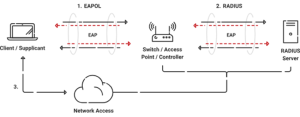
Port-based network access control (PNAC) is a security mechanism that controls network access at the port level. By implementing PNAC, organizations can ensure that onlyauthorized devices and users can connect to their infrastructure.
PNAC is closely associated with the IEEE 802.1X standard, which provides a robustframework for authenticating network devices attempting to connect to a wired or wireless network. The 802.1X standard uses an authentication protocol that requires each user or client device to have unique credentials or certificates. An authenticationserver, typically a RADIUS (Remote Authentication Dial-In User Service) server, validates these credentials.
PNAC is essential for maintaining a secure network environment.
See your security gap before attackers do.
See continuous trust in action on a platform that includes RADIUS, PKI and AI security.
How Does Port-Based Network Access Control Work?
Port-Based Network Access Control operates in the following way:
- Connection initiation: When a client device connects to a controlled port, the authenticator detects the connection.
- Authentication request: The supplicant sends an authentication request to the authenticator. Then, the authenticator forwards it to the authentication server, often a RADIUS server.
- Validation: The authentication server validates the credentials or certificates provided by the supplicant.
- Access decision: If the credentials are valid, the authentication server instructs the authenticator to grant network access to the supplicant. If the credentials are invalid, access will be denied.
When access is granted, the client is automatically assigned to the appropriate VLAN based on information from their credentials or certificates and the RADIUS server.
This is called VLAN steering, and it ensures clients can only access information they are authorized to access.
![Diagram showing how the flow between the supplicant, authenticator, and authentication works for port-based network access control.]](https://securew2.com/wp-content/uploads/2024/07/2-1-300x276.png)
Figure: Thanks to Wikipedia
What Happens When PNAC Blocks Network Access?
The authentication server may deny access because credentials are invalid, the device was flagged for non-compliance, or the system detects an unauthorized or rogue device.
When the PNAC blocks network access, one of two things can happen:
- The device is placed in a restricted or guest VLAN (Quarantine/Remediation VLAN): The switch assigns the connecting device to a separate VLAN that has very limited (or no) access to the rest of the network. This VLAN is typically configured to allow only essential services (such as DHCP, DNS, and access to a remediation server or captive portal) so the device can fix compliance issues without threatening the main network. For example, the device may need to update software, install patches or re-authenticate to gain access. This is the most common approach in modern enterprise environments because it provides visibility and a path to remediation rather than a hard block.
- The port is shut down entirely: The switch completely disables the physical port or keeps it in the unauthorized state with no traffic allowed except EAPoL authentication No communication is possible until an administrator manually re-enables the port or the underlying issue is resolved. This is a stricter, more aggressive response often used for high-security environments or repeated violations.
This layered response makes PNAC highlyeffective at preventing unauthorized access while maintaining operational flexibility.
What Other Security Protocols Does PNAC Use?
PNAC is often integrated with other security protocols to provide a robust network security solution. These networking protocols enhance the overall security posture of an organization. Here are some of the key security protocols commonly used in conjunction with PNAC:
RADIUS (Remote Authentication Dial-In User Service) or Authentication Server
RADIUS is a centralcomponent in the PNAC framework. The authentication server verifies the credentials of users or devices attempting to access the network. The RADIUS server authenticates, authorizes and accounts (AAA) for users, ensuring that only legitimateaccess is granted. It supports password-based and certificate-based authentication, making it more secure.
EAP (Extensible Authentication Protocol)
EAP is an authentication framework frequently used in wireless networks. It is used within the 802.1X standard to provide variousauthenticationmethods, such as EAP-TLS (Transport Layer Security), EAP-TTLS (Tunneled Transport Layer Security) and PEAP (Protected Extensible Authentication Protocol). These methods enable secure transmission of authentication information, ensuring that validcredentials are used during authentication.
LDAP (Lightweight Directory Access Protocol)
LDAP is used to access and manage directory information services over an IPnetwork. In the context of PNAC, LDAP can be integrated with the authentication server to retrievevalidcredentials and other authentication-related information from a centralizeddirectory, such as Microsoft Active Directory (AD). This integration allows for streamlined user management and supports mission-critical applications.
SNMP (Simple Network Management Protocol)
SNMP is used for networkmonitoring. In conjunction with PNAC, SNMP can monitor networkaccess and client device status, allowing network security engineers to detect and respond to unauthorized device access.
Network Access Control Lists (ACLs)
ACLs are used to definerules that control the incoming and outgoing traffic. With PNAC, ACLs can enforce access control policies, allowing or denying traffic access to network resources. This fine-grained control helps protect sensitivedata and networkassets from unauthorized device access.
What Can You Do With 802.1X Authentication?
802.1X authentication offers various functionalities that enhance network security and manageability. Here are the key capabilities that 802.1X authentication provides:
- Pre-admission control: Blocks unauthenticated messages, ensuring that only devices and users with proper credentials can initiate a connection
- Device and user detection: Identifies users and devices based on predefined credentials or machine IDs, enabling precise control over network access
- Authentication and authorization: Verifies user or client device credentials and the authentication server determines whether to grant access to the network, ensuring that only authenticated entities can connect
- Centralized authentication:1X authentication enables centralized authentication via an authentication server, typically a RADIUS server. Centralized authentication makes user management easier and provides uniform authentication policies across the network.
- Profiling: Scans connected devices to gather information about compliance status, which helps enforce security policies
- Policy enforcement: Applies role-based access control policies, ensuring users and devices access only authorized resources
- Post-admission control: Enforces session termination and cleanup processes, ensuring that sessions are properly closed and resources are freed when access is no longer required
By leveraging these capabilities, 802.1X authentication provides a comprehensive solution for securing network access and ensures that only authorized devices and users can connect. However, configuringdevices for 802.1X networks can be challenging without dedicated onboarding software.
Benefits of 802.1X Port-Based Network Access Control
The presence of social media, cloud computing, and BYOD policies in daily and business life has significantly impacted enterprise network resources. This has led to increased productivity but also increased exposure to networkthreats. Implementing 802.1X Network Access Control helps organizations reduce threats by:
- Limiting network access: PNAC ensures only authorized devices and users can gain network access. This authentication is essential in highly mobile environments where you can effectively reduce the risks associated with BYOD by enforcing strict device and user verification.
- Managing increased network traffic:1X NAC also helps manage the increased network traffic from social media and cloud computing by controlling access at the network ingress point. This reduces the risk of unauthorized access and data breaches, ensuring that sensitive information remains protected.
- Reducing management costs:1X’s centralized authentication system improves network management and reduces total cost of ownership (TCO) by eliminating the need for additional security measures.
802.1X NAC addresses these critical issues, allowing organizations to maintain a secure and resilient network environment.
The security plan that scales with you.
Our solutions can scale from mid-market to global enterprises. Compare options and see how our solutions protect you from costly breaches and ensure peace of mind.
Using Certificate-Based Authentication with Cloud RADIUS to Implement 802.1X
Port-based network access control (PNAC) provides an excellentbasis for ensuring that only authorized devices and users can access your network. Using the IEEE 802.1X standard, PNAC improves security and simplifies network administration, making it a crucial component of any organization’s security strategy.
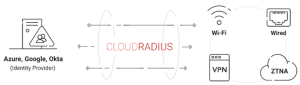
JoinNow Cloud RADIUS provides a robust and passwordless authentication solution that enhances network security by using digital certificates instead of traditional credentials. Using certificates reduces the dangers of credential theft and unauthorized access, which is critical for 802.1X systems that require safe and quick authentication.
Certificate-based authentication requires a Public Key Infrastructure (PKI), and SecureW2 offers a fully managed cloud PKI solution that contains everything needed to deploy passwordless authentication. Our PKI and Cloud RADIUS function flawlessly with all network infrastructure forms, including significant IDPs, MDMs and wireless access points. In addition, JoinNow MultiOS automatically configures unmanageddevices as well as gateway APIs, making onboarding seamless.
Schedule a demo to find out how SecureW2 can assist you in implementing PNAC and safeguarding your critical assets.
Frequently Asked Questions
Is PNAC still relevant?
Yes, port-based network access control (PNAC) remains highly relevant. It has evolved with zero-trust principles, supporting IoT, remote/hybrid work, BYOD and cloud environments. Many organizations use it for visibility, posture assessment and policy enforcement.
What are the 4 types of access control?
Common access control models include:
- Discretionary access control (DAC): Owners decide access. For example, file permissions are only granted to certain users.
- Role-based access control (RBAC): Access is based on user-designated roles or jobs within the organization. An engineer has access to engineering tools, while the human resources department does not.
- Attribute-based access control (ABAC): Dynamic rules based on attributes, context, or policies. Attributes can include information about the subject (name, department, job title, etc.), the resource (owner, sensitivity level, etc.), and the environment (time of access, geographic location, etc.)
- Policy-based access control (PBAC): Uses explicit policies to grant access based on a series of rules which could include time/date/location or other conditions. A physician may be able to access patient records only when the physician is on-site, using a managed device, and even then may only be granted access to their specific patients’ records.
Is PNAC the same as a firewall?
No. Firewalls primarily control traffic at network perimeters or between zones. PNAC focuses on who or what can connect internally. It authenticates devices/users, checks compliance, and enforces policies before granting network access. They are complementary: PNAC for admission control, firewalls for ongoing traffic filtering.
What is the difference between 802.1X and PNAC?
802.1X is a specific IEEE standard for port-based authentication. PNAC is a broader solution that may include 802.1X plus posture checks, profiling, quarantine, and integration with other tools for full network admission control.
How does certificate-based authentication improve 802.1X over password-based methods?
Certificates eliminate password risks like phishing, reuse, or brute-force attacks. They enable passwordless, mutual authentication and scale better with PKI management tools. This reduces credential theft and simplifies onboarding for both managed and unmanaged devices.
